




Can One PCR Thermal Cycler Support Both Research and Diagnostic Laboratories

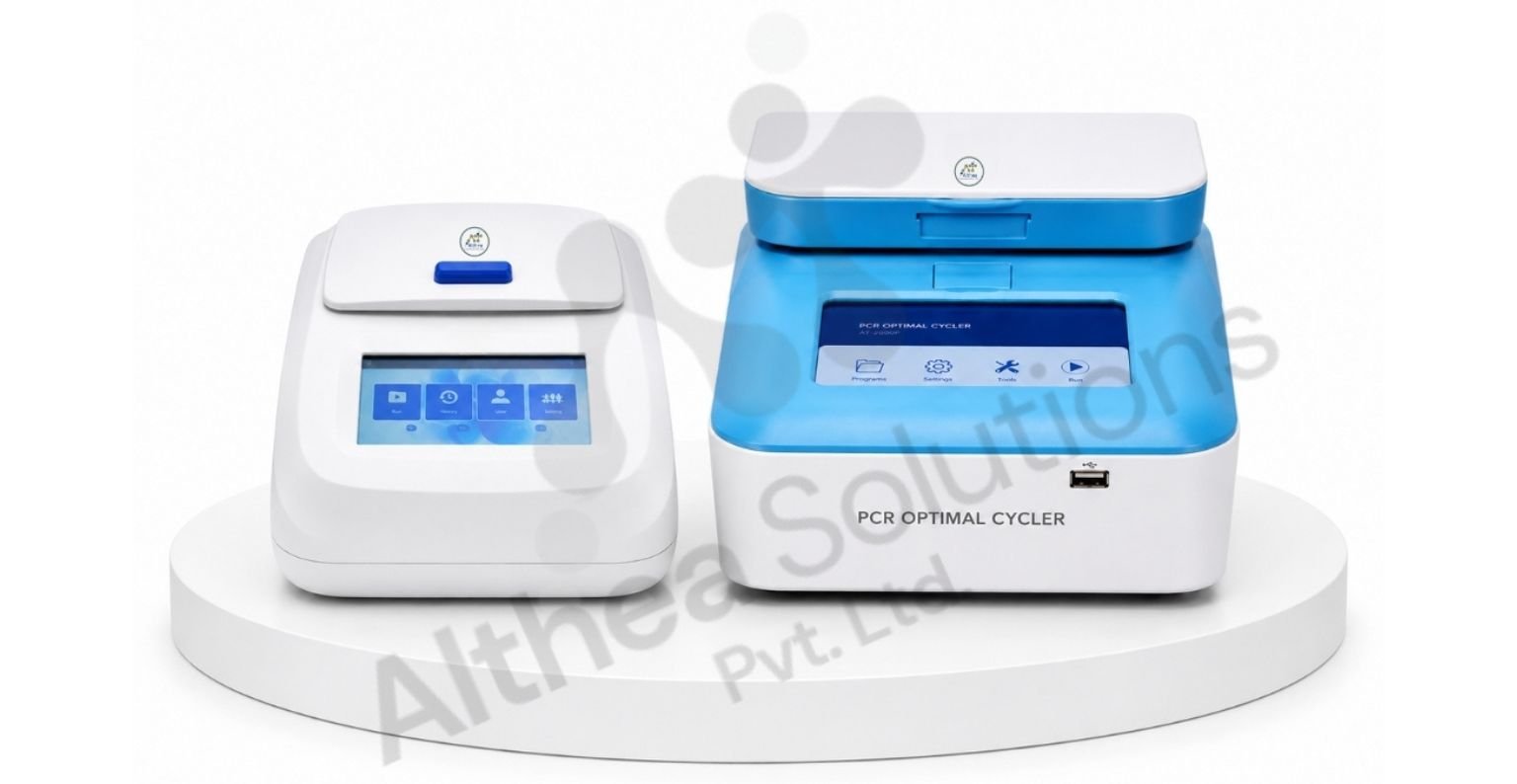
Modern laboratories are expected to deliver accurate results while managing different types of molecular biology workflows. A university research lab may spend the morning optimizing a new PCR protocol, while a diagnostic laboratory focuses on delivering consistent and repeatable DNA amplification for routine testing. This often raises an important question: Can one PCR Thermal Cycler support both research and diagnostic applications?
The answer depends on the instrument's performance, temperature precision, flexibility, and ease of use. A well-designed PCR Thermal Cycler should provide reliable thermal control, support different experimental protocols, and simplify daily laboratory operations. When these capabilities come together, one instrument can serve a wide range of molecular biology applications across research institutions, biotechnology companies, academic laboratories, and diagnostic settings.
Understanding the Needs of Research and Diagnostic Laboratories
Although research and diagnostic laboratories have different objectives, they rely on the same core PCR principles. Researchers often develop or optimize protocols, study gene expression, perform cloning, or investigate genetic variations. Diagnostic laboratories, on the other hand, focus on obtaining consistent and reproducible amplification results using validated methods
Both environments require dependable thermal cycling, accurate temperature control, and a system that performs consistently over repeated runs. As laboratory workloads continue to grow, selecting equipment that can adapt to multiple applications becomes a practical investment.
Can One PCR Thermal Cycler Handle Both Applications?
The latest generation of PCR machines is designed with flexibility in mind. Rather than being limited to a single type of workflow, many systems can support both experimental research and routine laboratory testing when they offer stable temperature performance and intuitive operation.
A reliable PCR Thermal Cycler allows laboratories to switch between different protocols without compromising consistency. This flexibility is especially valuable for institutions that conduct academic research while also supporting clinical or biotechnology projects. Instead of maintaining multiple thermal cyclers for different applications, laboratories can streamline operations with a versatile instrument that adapts to evolving needs.
Features That Matter Across Different Laboratory Workflows
When evaluating a PCR Thermal Cycler, laboratories should focus on features that improve both performance and usability.
- High temperature accuracy and uniformity for consistent DNA amplification across all samples.
- Fast heating and cooling rates that help reduce experiment time while maintaining thermal stability.
- Gradient PCR capability for protocol optimization, particularly during primer development and assay refinement.
- A user-friendly touchscreen interface, USB connectivity, and the ability to store more than 100 programs for simplified daily operation.
These capabilities help researchers optimize experiments while enabling diagnostic laboratories to perform repeatable PCR workflows with confidence. According to the Althea Solutions product specifications, the PCR Thermal Cycler offers temperature accuracy of up to ±0.1°C, temperature uniformity up to ±0.2°C, gradient functionality up to 30°C, USB data transfer, and extensive program storage, making it suitable for a wide range of laboratory applications.
Research and Diagnostic Laboratories: What Do They Have in Common?
|
Research Laboratories |
Diagnostic Laboratories |
Shared Requirements |
|---|---|---|
|
Protocol development |
Routine sample testin |
Accurate temperature control |
|
Gene expression studies |
DNA amplification |
Reliable thermal uniformity |
|
Cloning and molecular biology |
Repeatable workflows |
Consistent amplification results |
|
Assay optimization |
Standardized procedures |
Easy program management |
|
Experimental flexibility |
Operational efficiency |
User-friendly PCR system |
While their goals differ, both laboratory environments depend on dependable thermal performance, reproducible results, and efficient workflow management. Choosing equipment that supports these shared requirements helps laboratories maximize both productivity and long-term value.
Why Laboratories Prefer a Versatile PCR Thermal Cycler
Laboratory equipment is expected to perform reliably every day while remaining easy to operate for different users. A versatile thermal cycler for research and diagnostics reduces the need for separate instruments and simplifies training for laboratory staff.
It also allows teams to standardize workflows across departments, making protocol management more efficient. Laboratories can confidently store frequently used methods, transfer data through USB connectivity, and continue routine operations without unnecessary complexity.
Many organizations also appreciate instruments that occupy minimal bench space while offering the flexibility to support future projects. As research expands and diagnostic testing evolves, adaptable laboratory equipment becomes increasingly valuable.
How the Althea Solutions PCR Thermal Cycler Supports Modern Laboratories
The PCR Thermal Cycler from Althea Solutions has been developed to support laboratories looking for dependable DNA amplification across multiple applications. Its combination of precise thermal control, intuitive operation, and practical workflow features makes it suitable for molecular biology research, biotechnology laboratories, educational institutions, and diagnostic environments.
Key capabilities include:
- Temperature accuracy up to ±0.1°C and excellent temperature uniformity for dependable amplification.
- Gradient PCR functionality that supports protocol optimization and assay development.
- Fast heating and cooling performance for improved laboratory efficiency.
- A responsive 5-inch touchscreen interface that simplifies program creation and monitoring.
- Storage for more than 100 programs with USB connectivity for convenient data management.
- Continuous operation capability with an adjustable heated lid designed to support a wide variety of PCR applications.
These practical features help laboratories maintain consistent workflows while adapting to changing experimental requirements.
Choosing the Right PCR Thermal Cycler for Your Laboratory
Selecting a PCR Thermal Cycler is about more than comparing specifications. Laboratories should consider how the instrument fits their daily workflow, supports future projects, and delivers reliable performance over time.
A dependable thermal cycler should provide accurate temperature control, flexible programming, intuitive operation, and consistent results across different applications. Whether the goal is molecular biology research, biotechnology development, or routine DNA amplification, choosing a versatile system can improve efficiency while supporting high-quality laboratory outcomes.
If you are looking for a PCR Thermal Cycler that combines precision, ease of use, and flexibility for both research and diagnostic workflows, explore the PCR Thermal Cycler from Althea Solutions to learn how its features can support your laboratory’s evolving requirements.
Frequently Asked Questions
Q1. Can one PCR Thermal Cycler be used for both research and diagnostic applications?
Answer: Yes, a modern PCR Thermal Cycler can support both research and diagnostic workflows when it offers accurate temperature control, reliable thermal uniformity, flexible programming, and consistent performance. Many laboratories use the same instrument for molecular biology research, assay development, and routine DNA amplification.
Q2. What features should I look for in a PCR Thermal Cycler?
Answer: Some of the most important features include precise temperature accuracy, fast heating and cooling rates, gradient PCR capability, touchscreen operation, program storage, USB connectivity, and dependable thermal uniformity. These features help improve workflow efficiency and support consistent amplification results.
Q3.Why is temperature accuracy important in PCR?
Answer: PCR relies on repeated heating and cooling cycles to amplify DNA. Even small temperature variations can affect amplification efficiency and reproducibility. A PCR Thermal Cycler with high temperature accuracy and uniformity helps laboratories achieve more reliable and repeatable results.
Q4. What is Gradient PCR, and why is it useful?
Answer: Gradient PCR allows different temperatures to be tested simultaneously across the thermal block. This helps researchers identify the optimal annealing temperature for new primers and assays, making protocol optimization faster and more efficient.


