




Step-by-Step Guide to Using a Rotary Evaporator Safely and Efficiently

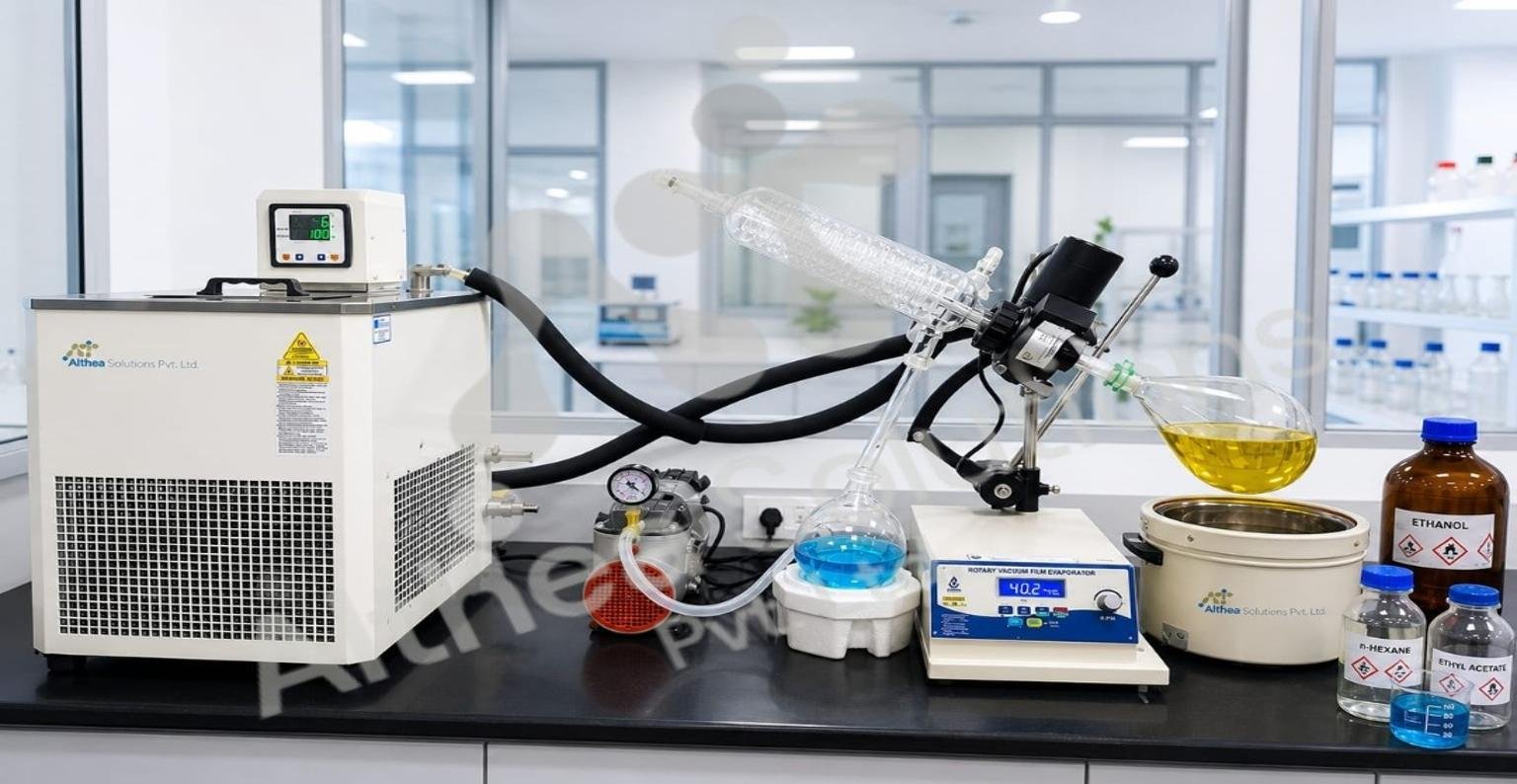
A rotary evaporator is a widely used laboratory instrument designed for efficient solvent removal through controlled evaporation under reduced pressure. It plays a critical role in pharmaceutical, biotechnology, and research laboratories where precise laboratory distillation and sample concentration are required.
By combining rotation, heat, and vacuum, the system enables faster evaporation while protecting heat-sensitive compounds from degradation. Proper operation is essential not only for achieving consistent results but also for maintaining laboratory safety standards. Organizations working with advanced chemical processing equipment often rely on proven solutions and technical expertise from established providers such as a trusted laboratory equipment supplier in India like Althea Solutions.
What is a Rotary Evaporator and How Does It Work?
Arotary evaporatoris a laboratory device used to remove solvents from samples through evaporation under reduced pressure. It combines rotation, heating, and vacuum to accelerate the evaporation process while minimizing thermal degradation.
The rotary evaporator working principle is based on lowering the boiling point of solvents using a vacuum evaporation system. As the evaporation flask rotates in a heated bath, it increases the surface area of the liquid, promoting faster evaporation. The vaporized solvent then passes through a condenser system where it cools and collects in a receiving flask.
This controlled rotary evaporation process ensures efficient laboratory distillation, making it essential for chemical processing and analytical workflows.
Key Components of a Rotary Evaporator
A rotary evaporator consists of several integrated components that work together to ensure efficient solvent removal and safe operation.
- Evaporation flask: Holds the sample and rotates to increase surface area
- Condenser system: Cools vapor into liquid for collection
- Vacuum pump: Reduces pressure to lower boiling points
- Heating bath: Provides controlled heat for evaporation
- Receiving flask: Collects condensed solvent
Each component plays a critical role in maintaining process efficiency and ensuring consistent results in laboratory applications.
Step-by-Step Process to Use a Rotary Evaporator
Using a rotary evaporator correctly involves a systematic approach that ensures both safety and optimal performance. The process begins with proper equipment setup, followed by controlled operation and careful shutdown.
Start by assembling the apparatus and ensuring all glassware is clean, dry, and free from cracks. Secure the evaporation flask to the rotating axis and ensure proper sealing to maintain vacuum pressure. Fill the heating bath with an appropriate medium, typically water or oil, depending on the required temperature range.
Next, initiate the vacuum pressure control system to reduce pressure gradually. This step is crucial for preventing sudden boiling or bumping of the sample. Once vacuum conditions are stable, start the rotation and immerse the flask partially in the heating bath. The combination of rotation and heat enables efficient solvent evaporation.
During operation, continuously monitor temperature, pressure, and rotation speed to maintain process stability. Adjust parameters based on solvent characteristics and sample sensitivity.
- Set appropriate bath temperature based on solvent boiling point
- Maintain steady rotation speed to prevent uneven heating
- Gradually apply vacuum to avoid sample loss
After evaporation is complete, carefully release the vacuum before stopping rotation. Remove the flask only after ensuring the system has returned to atmospheric pressure. This prevents accidents and preserves sample integrity.
Safety Precautions When Using a Rotary Evaporator
Safety is essential when working with any chemical processing equipment, especially one involving heat, vacuum, and volatile solvents. Improper handling can lead to glass breakage, chemical exposure, or equipment damage.
- Always inspect glassware for cracks before use
- Avoid overfilling the evaporation flask
- Use appropriate personal protective equipment (PPE)
Maintaining proper ventilation and ensuring compatibility of solvents with system materials further reduces risks. Regular maintenance of vacuum seals and condenser systems is also critical for safe operation.
Common Mistakes to Avoid
Many operational issues arise from incorrect parameter settings or improper handling. One of the most frequent errors is applying vacuum too quickly, which can cause bumping and sample loss. Another common issue is using incorrect bath temperatures, leading to inefficient evaporation or thermal degradation.
Improper sealing of joints can reduce vacuum efficiency, while overloading the evaporation flask can hinder rotation and heat transfer. Ignoring routine maintenance of the condenser system and vacuum pump often results in reduced performance over time.
Recognizing these issues early helps maintain consistency in the lab evaporation process and extends equipment lifespan.
Tips to Improve Efficiency and Performance
Optimizing a rotary evaporator involves fine-tuning operational parameters based on solvent properties and desired outcomes. Maintaining the right balance between temperature, pressure, and rotation speed significantly improves evaporation rates.
Using a properly calibrated vacuum evaporation system ensures precise pressure control, which is critical for efficient solvent removal. Selecting the correct condenser temperature enhances vapor recovery and reduces solvent loss.
Consistent monitoring and incremental adjustments allow operators to achieve maximum efficiency without compromising safety or sample quality.
Applications of Rotary Evaporators in Different Industries
Rotary evaporators are widely used across multiple industries due to their versatility and precision. In pharmaceutical laboratories, they are essential for drug formulation and solvent recovery. Biotechnology labs rely on them for sample concentration and purification processes.
In food and beverage testing, rotary evaporators are used for flavor extraction and quality analysis. Research institutions utilize them for chemical synthesis and analytical studies. Their role in industrial lab solutions continues to expand as demand for precise and efficient evaporation techniques grows.
Why Choose High-Quality Rotary Evaporators from Althea Solutions
Selecting the right equipment directly impacts laboratory efficiency and safety.Althea Solutionsoffers advanced rotary evaporators designed for precision, durability, and consistent performance.
With a strong presence as a laboratory equipment supplier in India, the company provides reliable systems tailored to industrial and research requirements. Their expertise in scientific instruments ensures that each unit meets stringent quality standards, making them suitable for demanding laboratory environments.
FAQs
Q1. What is a rotary evaporator used for?
Answer: A rotary evaporator is used for solvent removal, concentration, and purification of samples in laboratory settings, particularly in chemical and pharmaceutical processes.
Q2. How does a rotary evaporator work?
Answer: It works by reducing pressure to lower the solvent’s boiling point while rotating the sample in a heated bath, enabling efficient evaporation and condensation.
Q3. What safety precautions should be taken?
Answer: Operators should inspect glassware, control vacuum pressure carefully, and use protective equipment to prevent accidents and exposure.
Q4. What temperature should be used in a rotary evaporator?
Answer: The temperature depends on the solvent’s boiling point but is typically set lower due to reduced pressure in the system.
Q5. Why is vacuum important in rotary evaporation?
Answer: Vacuum reduces boiling points, allowing evaporation at lower temperatures, which protects heat-sensitive compounds.
Q6. What industries use rotary evaporators?
Answer: They are widely used in pharmaceuticals, biotechnology, food testing, and research laboratories for various evaporation techniques and chemical processing tasks.