




What Is a Laboratory Sieve Shaker? How It Works and Why It Matters for Accurate Particle Size Analysis

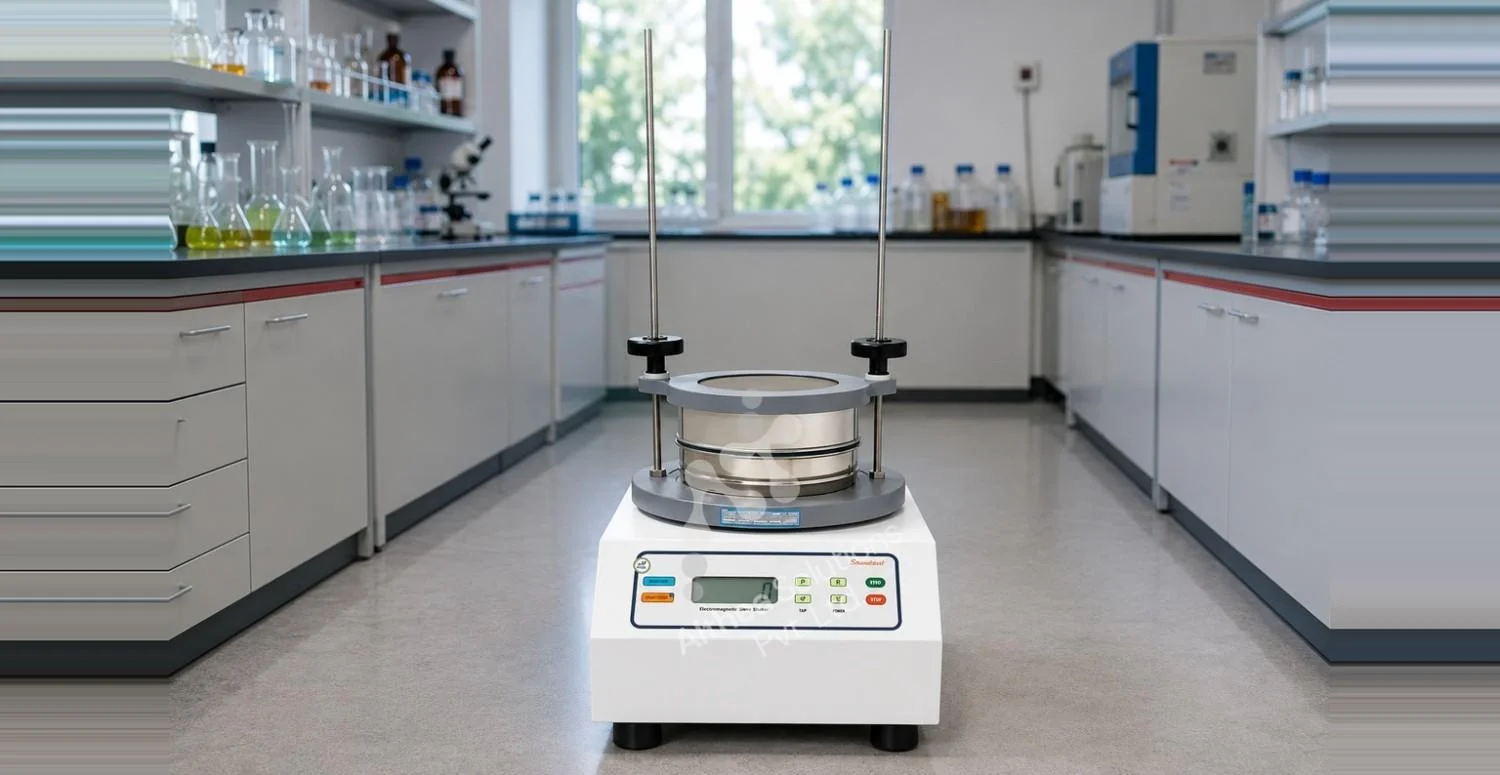
A laboratory sieve shaker is a precision testing instrument used to separate and analyze particles based on their size. By applying controlled vibrations to a stack of test sieves, it ensures accurate, repeatable particle size analysis for industries such as pharmaceuticals, construction, mining, environmental testing, and research laboratories.
Have you ever wondered how laboratories ensure that powders, granules, soil, aggregates, or other materials meet strict quality standards? The answer often begins with particle size analysis. Even small variations in particle size can affect product quality, manufacturing consistency, and research outcomes. That's why laboratories rely on a laboratory sieve shaker to deliver accurate and repeatable results.
Whether testing pharmaceutical powders or grading construction materials, a sieve shaker simplifies the process while improving consistency. Modern systems, especially electromagnetic sieve shakers, offer greater precision, quieter operation, and better control over every test. As a laboratory equipment manufacturer in Mumbai, Althea Solutions develops testing equipment designed to help laboratories achieve dependable results across a wide range of applications.
What Is a Laboratory Sieve Shaker?
A laboratory sieve shaker is a laboratory instrument designed to separate particles into different size fractions using a stack of standard test sieves. Instead of manually shaking sieves, the instrument applies controlled and consistent vibrations that allow particles to pass through the appropriate mesh openings.
This method, commonly known as sieve analysis, is widely used for quality control, research, product development, and compliance testing. Because the vibration remains consistent throughout the test, laboratories can obtain repeatable results that improve confidence in every analysis.
Why Particle Size Analysis Matters
Particle size directly influences how a material performs. In pharmaceutical manufacturing, it affects blending, dissolution, and tablet quality. In construction, it helps determine the grading of aggregates and soil. Environmental laboratories use particle size analysis to evaluate sediments, while mining facilities depend on it for material classification.
Accurate particle size analysis supports:
- Better product consistency and quality control
- Reliable research and development outcomes
- Compliance with laboratory testing standards
- Improved manufacturing efficiency
- Reduced variability between test results
Using a reliable laboratory sieve shaker ensures these tests are performed with greater accuracy and repeatability than manual methods.
How Does a Laboratory Sieve Shaker Work?
Although the testing process is straightforward, precision comes from maintaining controlled movement throughout the analysis.
- A stack of test sieves is arranged from the largest mesh opening to the smallest, with a receiver pan placed at the bottom.
- The sample material is added to the top sieve before the stack is securely locked into the sieve shaker.
- The operator selects the required testing time and vibration settings based on the sample and testing method.
- The instrument generates controlled vibrations, allowing finer particles to pass through successive sieves while larger particles remain on their respective mesh sizes.
- Once the cycle is complete, each sieve is examined, and the retained material is weighed to determine the particle size distribution.
Modern electromagnetic sieve shakers improve this process by delivering consistent vibration patterns, helping laboratories achieve highly repeatable results with minimal operator variation.
Main Components of a Laboratory Sieve Shaker
|
Component |
Function |
|---|---|
|
Test Sieve Stack |
Separates particles according to mesh size |
|
Electromagnetic Drive |
Produces controlled vibration for uniform particle movement |
|
Microprocessor Controller |
Allows precise adjustment of power and testing time |
|
LCD Display |
Displays operating parameters and timer settings |
|
Easy Lock System |
Secures the sieve stack for stable operation |
|
Receiver Pan |
Collects particles passing through the smallest sieve |
Where Are Laboratory Sieve Shakers Used?
Laboratory sieve shakers are trusted across multiple industries because they provide consistent and repeatable particle size analysis.
- Pharmaceutical laboratories for powder and granule testing.
- Construction and civil engineering laboratories for cement, sand, and aggregate analysis.
- Mining and mineral processing facilities for grading extracted materials.
- Environmental laboratories for soil, sediment, and wastewater sample analysis.
- Food, chemical, and academic research laboratories for quality control and scientific studies.
As laboratories continue to generate larger volumes of experimental data, dependable gel imaging has become an important part of efficient laboratory workflows.
Why Electromagnetic Sieve Shakers Are Becoming the Preferred Choice
Not all sieve shakers operate in the same way. Electromagnetic sieve shakers use controlled electromagnetic vibrations that help produce uniform particle movement throughout the testing cycle. This controlled motion improves separation efficiency while reducing unnecessary noise and maintenance.
The Althea Solutions Electromagnetic Sieve Shaker is designed with this principle in mind. Its circular sieving motion combined with rapid vertical agitation helps minimize sieve blinding and supports efficient particle separation. The microprocessor-controlled system allows users to adjust vibration levels from 1 to 20 and set testing times from 1 to 99 minutes, making it suitable for a wide variety of laboratory applications.
The unit also offers both continuous and intermittent operating modes, allowing laboratories to choose the most appropriate testing method based on the material being analyzed. Compatibility with 100 mm to 200/203 mm standard test sieves, a user-friendly 20×4 LCD display, easy-lock mechanism, optional wet sieving attachment, and available IQ/OQ documentation make it a practical solution for laboratories focused on accuracy and compliance.
As a Mumbai-based laboratory equipment manufacturer, Althea Solutions Pvt. Ltd. develops laboratory testing instruments that combine dependable performance with simple operation, making them suitable for pharmaceutical, research, environmental, construction, and industrial laboratories across India.
Choosing the Right Laboratory Sieve Shaker
When selecting a laboratory sieve shaker, consider the following factors to ensure it meets your testing requirements:
- Type of material being analyzed and required particle size range.
- Compatibility with standard sieve diameters used in your laboratory.
- Adjustable vibration intensity and timer settings for repeatable testing.
- Ease of operation, cleaning, and maintenance.
- Availability of documentation and compliance support, such as IQ/OQ where required.
Choosing an instrument that balances precision, usability, and long-term reliability helps laboratories maintain consistent testing standards over time.
Precision Begins with the Right Testing Equipment
Every laboratory relies on accurate data to make important decisions, and particle size analysis is no exception. A dependable laboratory sieve shaker ensures that every test is performed under controlled conditions, reducing variations and improving confidence in the results.
The Althea Solutions Electromagnetic Sieve Shaker is designed to support this objective through controlled electromagnetic vibration, adjustable operating parameters, and repeatable performance. Manufactured by Althea Solutions, a laboratory equipment manufacturer in Mumbai, it reflects the company’s commitment to providing practical and reliable laboratory solutions for quality control, research, and industrial testing applications.
Frequently Asked Questions
Q1. What is the purpose of a laboratory sieve shaker?
Answer: A laboratory sieve shaker separates particles by size using controlled vibrations, enabling accurate particle size analysis for quality control, research, and material testing.
Q2.What industries commonly use laboratory sieve shakers?
Answer: They are widely used in pharmaceutical, construction, mining, environmental, food, chemical, and research laboratories for sieve analysis and quality assurance.
Q3.Why choose an electromagnetic sieve shaker?
Answer: Electromagnetic sieve shakers provide consistent vibration, quieter operation, adjustable settings, and highly repeatable test results, making them suitable for precision laboratory work.
Q4. What sieve sizes are supported by the Althea Solutions Electromagnetic Sieve Shaker?
Answer: The system is compatible with standard test sieves ranging from 100 mm to 200/203 mm in diameter, offering flexibility for various testing applications.
Q5. Does the Althea Solutions Electromagnetic Sieve Shaker support compliance documentation?
Answer: Yes. The instrument is available with IQ/OQ documentation, making it suitable for laboratories that require validation support as part of their quality systems.


