




How Ultrasonic Cleaners Improve Precision Cleaning in Laboratories

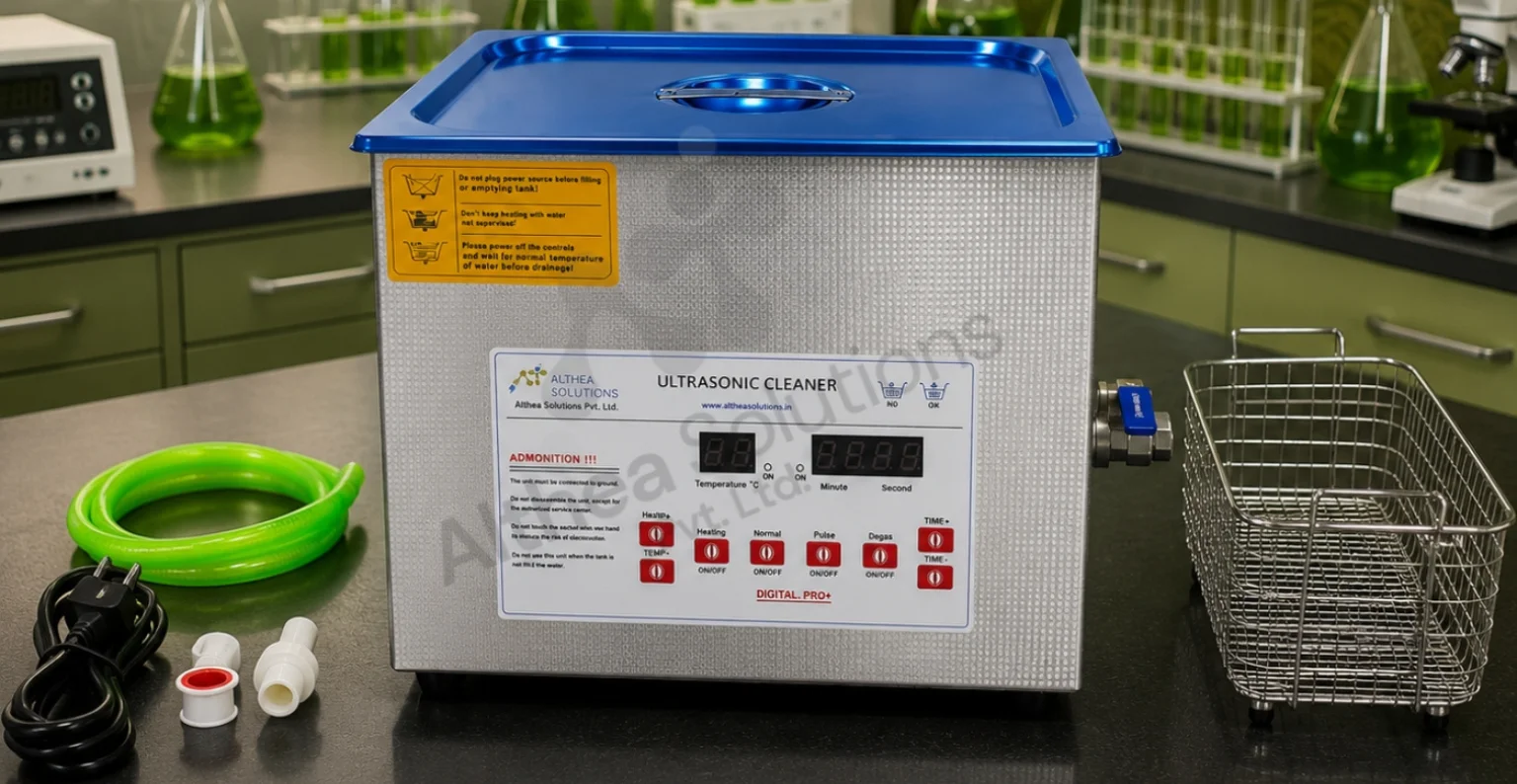
Modern laboratories depend on accuracy at every stage of testing, analysis, and research. Even microscopic traces of contamination can interfere with sensitive procedures, affect data reliability, and compromise laboratory hygiene standards. This is why ultrasonic cleaners for laboratories have become an essential part of scientific and industrial cleaning workflows.
Unlike manual washing methods, ultrasonic cleaning technology uses high-frequency sound waves to remove contaminants from hard-to-reach surfaces with remarkable consistency. From pharmaceutical facilities to pathology laboratories, ultrasonic cleaning equipment helps maintain precision instruments while improving cleaning efficiency and reducing the risk of damage.
Why Precision Cleaning Matters in Laboratories
Laboratory environments demand exceptionally high cleanliness standards. Instruments used in medical diagnostics, chemical analysis, biotechnology research, and industrial testing often come into contact with residues that are invisible to the naked eye. If these contaminants are not removed properly, they can affect experimental outcomes, calibration accuracy, and cross-sample integrity.
Precision cleaning in laboratories is particularly important for instruments with narrow channels, intricate surfaces, or delicate components. Traditional cleaning methods may remove visible debris, but they frequently struggle to eliminate microscopic particles trapped within inaccessible areas.
In medical and research laboratories, residue-free cleaning also supports contamination control practices and equipment longevity. Consistent cleaning routines help laboratories comply with operational standards while reducing maintenance-related disruptions.
What Are Ultrasonic Cleaners?
A laboratory ultrasonic cleaner is a specialised cleaning system designed to remove contaminants using high-frequency ultrasonic waves. The equipment typically consists of a stainless-steel tank filled with a cleaning solution and powered by ultrasonic transducers.
When activated, the ultrasonic cleaner machine generates sound waves within the liquid. These waves create millions of microscopic bubbles through a process known as cavitation cleaning technology. As the bubbles rapidly form and collapse, they release tiny bursts of energy that dislodge contaminants from instrument surfaces.
This process is highly effective for scientific instrument cleaning because it reaches areas that are difficult or impossible to clean manually.
How Cavitation Removes Contaminants
Cavitation is the core principle behind ultrasonic cleaning equipment. The microscopic bubbles generated in the cleaning bath penetrate crevices, joints, fine tubing, and textured surfaces. Their rapid implosion loosens oils, biological residues, dust particles, and chemical deposits without excessive abrasion.
Because the cleaning action occurs uniformly throughout the solution, laboratories achieve better cleaning consistency compared with brushing or solvent wiping methods.
Why Ultrasonic Cleaning Is More Effective Than Manual Cleaning
Manual cleaning often depends on operator technique, making results inconsistent. Brushes and cloths can also damage delicate instrument surfaces over time. Ultrasonic bath cleaners provide a more controlled and repeatable process while reducing physical handling of sensitive equipment.
The method is particularly suitable for:
- Glassware with narrow openings
- Precision instruments with delicate parts
- Laboratory tools requiring residue-free cleaning
Key Benefits of Ultrasonic Cleaners in Laboratories
Ultrasonic cleaning systems support both operational efficiency and contamination prevention across laboratory environments.
-
Improved Cleaning Precision:
Ultrasonic waves clean microscopic areas that conventional methods may miss. This enables more thorough contaminant removal from complex instruments and sensitive laboratory components. -
Faster Turnaround Times:
Laboratories processing multiple samples each day benefit from shorter cleaning cycles. Instruments can often be cleaned simultaneously within the ultrasonic bath, reducing downtime between procedures.
-
Safer Cleaning for Delicate Equipment:
Delicate instrument cleaning requires methods that minimise physical stress. Ultrasonic systems reduce the need for aggressive scrubbing, helping preserve instrument integrity and calibration accuracy. -
Better Laboratory Hygiene:
Consistent and repeatable cleaning contributes to stronger laboratory hygiene practices. Ultrasonic cleaning also supports chemical-safe cleaning processes when appropriate cleaning solutions are selected for the application.
Where Are Ultrasonic Cleaners Used in Laboratories?
Ultrasonic cleaners for laboratories are widely used across scientific, medical, and industrial sectors because of their adaptability and cleaning precision.
|
Laboratory Setting |
Common Items Cleaned |
|---|---|
|
Pharmaceutical laboratories |
glassware, filters, mixing tools |
|
Pathology laboratories |
surgical instruments, sample tools |
|
Biotechnology centres |
precision components, research equipment |
|
Educational laboratories |
test tubes, laboratory apparatus |
| Industrial testing labs | metal parts, measuring instruments |
In pharmaceutical environments, ultrasonic cleaners help maintain contamination control during research and formulation activities. Biotechnology facilities often rely on ultrasonic cleaning equipment for precision instruments that require careful handling.
Educational and research laboratories also benefit from reduced manual labour and improved cleaning consistency, particularly where large volumes of equipment must be processed regularly.
Why Laboratories Prefer Ultrasonic Cleaning Over Traditional Methods
Traditional laboratory cleaning techniques often involve soaking, brushing, rinsing, or solvent cleaning. While these methods remain common, they may not provide the same level of precision or repeatability.
-
Manual Cleaning Limitations:
Hand cleaning can leave residues behind, particularly within small channels and intricate instrument surfaces. Cleaning quality may also vary between operators. -
Reduced Risk of Surface Damage:
Conventional scrubbing methods can scratch delicate components or damage protective coatings. Ultrasonic cleaning provides a gentler alternative for sensitive instruments.
Greater Efficiency and Repeatability
Ultrasonic bath cleaners deliver consistent cleaning cycles with less manual intervention. This helps laboratories standardise cleaning procedures while improving operational efficiency.
The combination of cavitation cleaning technology and controlled cleaning conditions makes ultrasonic systems particularly valuable for modern laboratory workflows where precision and repeatability are essential.
Choosing a Reliable Laboratory Ultrasonic Cleaner
When selecting ultrasonic cleaning equipment, laboratories typically consider cleaning performance, tank durability, ease of operation, and compatibility with laboratory applications.
The Ultrasonic Cleaner from Althea Solutions is designed for professional environments where cleaning consistency and reliability are important. Its construction supports routine laboratory use, while the ultrasonic cleaning mechanism enables effective microscopic contaminant removal across a wide range of instruments and components.
For laboratories handling delicate instruments, scientific glassware, or precision equipment, a dependable ultrasonic cleaner machine can help streamline maintenance procedures and improve cleaning outcomes without excessive manual handling.
Althea Solutions also offers laboratory-focused scientific solutions that align with the operational requirements of research facilities, healthcare environments, educational institutions, and industrial laboratories.
How Ultrasonic Cleaning Supports Laboratory Standards
Laboratories increasingly prioritise contamination prevention, equipment reliability, and reproducible processes. Ultrasonic cleaning contributes to these objectives by supporting:
- 1. Cleaning consistency across repeated cycles
- 2. Reduced residue build-up on sensitive equipment
- 3. Improved maintenance of precision instruments
Because the process can access hidden surfaces more effectively than conventional cleaning methods, ultrasonic systems are widely recognised as a practical solution for scientific instrument maintenance and laboratory hygiene management.
The Future of Precision Cleaning in Modern Laboratories
Maintaining clean laboratory instruments is essential for reliable testing, accurate research outcomes, and effective contamination control. Ultrasonic Cleaners for Laboratories provide a practical and efficient solution for removing microscopic residues while protecting delicate equipment from unnecessary wear.
By combining cavitation cleaning technology with consistent cleaning performance, ultrasonic systems help laboratories improve hygiene standards, reduce manual effort, and support precision-driven workflows across scientific and industrial applications.
Frequently Asked Questions
Q1. What is an ultrasonic cleaner used for in laboratories?
Answer: An ultrasonic cleaner is used to remove contaminants from laboratory instruments, glassware, and precision components using high-frequency sound waves and cavitation cleaning technology.
Q2. Is ultrasonic cleaning safe for delicate laboratory instruments?
Answer: Yes. Ultrasonic cleaning is generally considered safe for delicate instrument cleaning because it reduces the need for abrasive brushing or aggressive manual handling.
Q3. How does cavitation cleaning technology work?
Answer: Cavitation occurs when ultrasonic sound waves create microscopic bubbles in a cleaning solution. These bubbles collapse rapidly, releasing energy that removes contaminants from surfaces.
Q4. Can ultrasonic cleaners remove microscopic contaminants?
Answer: Yes. Ultrasonic cleaning equipment is highly effective for microscopic contaminant removal, particularly in small crevices and hard-to-reach instrument areas.
Q5. Why is ultrasonic cleaning preferred over manual cleaning?
Answer: Laboratories prefer ultrasonic cleaning because it offers better cleaning consistency, improved efficiency, reduced labour, and lower risk of damage to precision instruments.


