




Why Every Food Testing Lab Needs a Stomacher Blender

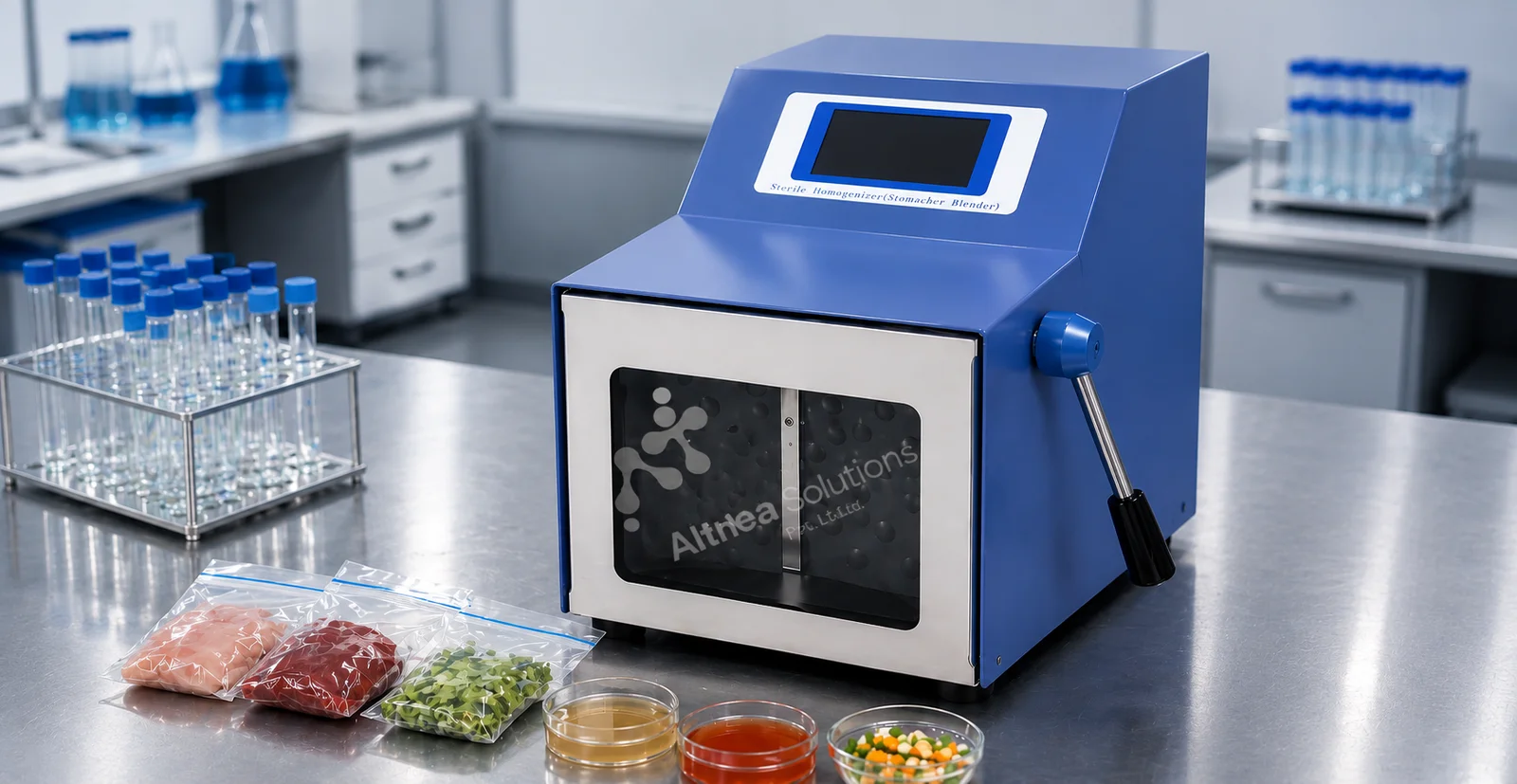
In many food testing labs, one common issue quietly affects results inconsistent microbial findings. A sample tested twice may produce slightly different outcomes, not because of testing errors but due to improper sample preparation.
This problem often starts at the very first step: homogenisation.
When food samples are not mixed evenly, pathogens may remain unevenly distributed, leading to inaccurate detection. This directly impacts food safety decisions, compliance, and even brand reputation.
This is where a Stomacher blender becomes essential. It simplifies and standardises sample preparation, ensuring reliable and reproducible results across tests.
What is a stomacher blender?
A Stomacher blender is a laboratory device used to homogenise food samples in sterile conditions by mechanically “massaging” them inside sealed bags without direct contact between the sample and the machine.
In food microbiology labs, it is widely used for sample preparation in food labs, especially for microbial analysis and pathogen detection. Instead of grinding or cutting, the machine uses paddle action to gently break down the sample and mix it with a buffer solution.
Why Sample Preparation is Critical in Food Testing
Sample preparation is not just a preliminary step it determines the accuracy of the entire testing process.
1. Accurate Microbial Detection
Microorganisms are not evenly distributed in food. Without proper sample homogenisation, pathogens like Salmonella or E. coli may go undetected.
2. Avoiding Contamination
Manual handling increases exposure to contaminants. Poor aseptic processing can compromise results and lead to false positives or negatives.
3. Consistent Test Results
Consistency is key in laboratory testing. Uneven mixing leads to variability, which makes it difficult to validate or reproduce results.
Poor homogenisation directly affects microbial analysis, making results unreliable and audits difficult to pass.
Why Every Food Testing Lab Needs a Stomacher Blender
A stomacher blender is not just another piece of lab equipment—it is a critical tool for maintaining testing quality and efficiency.
1. Ensures Uniform Sample Mixing
The paddle-based blending ensures that the sample and buffer solution are mixed evenly, allowing accurate pathogen detection.
2. Reduces Contamination Risk
Since samples are processed in sterile bags, there is no direct contact with machine components. This significantly improves contamination control.
3. Saves Time Compared to Manual Methods
Manual crushing or mixing is slow and labour-intensive. A stomacher machine processes samples in minutes, improving lab productivity.
4. Improves Reproducibility
Standardised blending conditions mean results can be replicated consistently, which is essential for audits and certifications.
For labs handling multiple samples daily, investing in proper lab homogenisation equipment is not optional; it’s necessary.
How a Stomacher Blender Works
Understanding how the machine works helps beginners use it effectively.
- Sample Placement
The food sample is placed inside a sterile stomacher bag. - Buffer Addition
A buffer solution is added to help release microorganisms from the sample. - Paddle Action
The machine’s paddles move back and forth, gently crushing and mixing the sample. - Homogenized Output
The result is a uniform mixture ready for microbial testing.
This process supports accurate sample preparation using stomacher blender methods widely accepted in food safety labs.
Beginner Mistake: Manual Mixing vs Stomacher Blender
Many beginners assume manual mixing is sufficient. In reality, it creates several problems.
Manual crushing or stirring often leads to:
- Uneven sample distribution
- Higher contamination risk
- Inconsistent microbial counts
A Stomacher Blender, on the other hand, provides controlled, repeatable homogenization. It eliminates variability and ensures that every test starts with a reliable sample.
Step-by-Step: Using a Stomacher Blender in a Lab
Here’s a simple workflow beginners can follow:
- Sample Collection
Collect the food sample using sterile tools to maintain aseptic conditions. - Bag Preparation
Place the sample into a sterile stomacher bag and add the required buffer solution. - Blending Process
Insert the bag into the stomacher machine and set the time and speed. - Post-Processing
Remove the homogenised sample and proceed with microbial analysis or dilution steps.
This structured process improves lab sample preparation and ensures compliance with testing protocols.
Unique Insights
Role in Food Safety Compliance
Regulatory bodies like FSSAI, WHO, and FDA emphasise standardised sample preparation methods.
Using a laboratory blender for microbiology like a stomacher ensures compliance with these guidelines.
Impact on Lab Credibility
Accurate and reproducible results build trust with clients and auditors. Labs that use standardised equipment are more likely to pass inspections and maintain certifications.
Hidden Cost of Poor Sample Preparation
Inconsistent results can lead to:
- Retesting costs
- Delayed reports
- Loss of client trust
Investing in proper equipment reduces these hidden expenses.
Importance in High-Throughput Labs
Labs processing dozens or hundreds of samples daily need speed and consistency. A stomacher machine enables efficient batch processing without compromising accuracy.
How to Choose the Right Stomacher Blender
Selecting the right equipment depends on your lab’s needs.
1. Lab Workload
High-volume labs should opt for machines designed for continuous operation.
2. Sample Types
Different food categories (solid, soft, fibrous) require varying blending capabilities.
3. Build Quality
Durable construction ensures long-term reliability and consistent performance.
4. Ease of Cleaning
Hygienic design is crucial for maintaining aseptic processing standards.
5. Budget vs Long-Term Value
Cheaper machines may compromise accuracy or durability. Investing in quality equipment pays off over time.
If you’re exploring reliable options, you can check solutions offered by Althea Solutions, known for providing advanced lab equipment for food safety testing.
Real-World Applications
Dairy Testing Labs
Used for detecting microbial contamination in milk, cheese, and other dairy products.
Meat and Poultry Labs
Essential for identifying pathogens like Salmonella in raw meat samples.
Packaged Food Testing
Ensures processed foods meet safety standards before reaching consumers.
Beverage Industry
Used for microbial testing in juices, soft drinks, and bottled water.
Across industries, a food testing homogeniser plays a key role in maintaining product safety.
How Althea Solutions Supports Food Testing Laboratories
Food testing labs require equipment that is reliable, precise, and compliant with industry standards. Althea Solutions focuses on delivering high-quality laboratory equipment tailored for modern food safety testing environments.
Their range of solutions supports:
- Accurate sample homogenization
- Improved lab efficiency
- Compliance with regulatory standards
For growing laboratories, having the right partner matters as much as having the right equipment. Althea Solutions helps labs scale operations while maintaining accuracy and consistency.
You can also discover specialised equipment and consultation support directly through their platform to enhance your lab’s performance and compliance readiness.
FAQs
Q1. What does a stomacher blender do?
Answer : A stomacher blender homogenizes food samples in sterile bags, ensuring even distribution of microorganisms for accurate testing.
Q2. Why is it used in microbiology?
Answer : It helps release microorganisms from food samples into a buffer solution, making microbial analysis more reliable.
Q3. Can I use a regular blender for lab testing?
Answer : No. Regular blenders are not sterile and increase contamination risk. They also produce inconsistent results.
Q4. How long does homogenization take?
Answer : Typically, 30 seconds to 2 minutes, depending on the sample type and testing requirements.
Q5. Is it required for food safety compliance?
Answer : While not always mandatory, it is strongly recommended by global food safety guidelines for accurate and standardized testing.